
Eyelid Surgery - Blepharoplasty in San Francisco Bay Area
Dr. Usha Rajagopal and the medical staff at San Francisco Plastic Surgery and Laser Center are proud to offer eyelid surgery (blepharoplasty) to Bay Area residents and beyond
If you believe that your eyes are making you look tired, sad, or older than you really feel, cosmetic eyelid surgery may be the right choice for you. Eyelid surgery can remove the excess fat and drooping skin of the upper eyelids, minimize bags under the eyes and tighten the lower eyelid skin, resulting in a more refreshed and rejuvenated look.
We are proud to offer blepharoplasty procedures utilizing the latest technology and medical techniques.
21 years of experience in blepharoplasty and cosmetic surgery
Over 10,000 successful procedures performed
Top-rated Bay Area female cosmetic surgeon (yelp.com)
Top-rated Bay Area plastic surgeon (yelp.com)
Televised beauty and cosmetic surgery consultant (Kron 4 News – “Body Beautiful”)
Over 20 years of local service in San Francisco, California
Watch Dr. Usha Rajagopal discuss her Beautiful Eyes treatment which helps to rejuvenate the look of her patients:
Dr. Usha Rajagopal discusses blepharoplasty surgery:
Dr. Usha Rajagopal discusses her Beautiful Eyes treatment:
*Disclaimer: Results are not guaranteed and may vary from person to person.
The Best Candidates For Cosmetic Eyelid Lift
You may be a good candidate for eyelid surgery if you have any of the following conditions:
Upper Eyelids
excess skin that hides the natural fold of the upper eyelids
loose skin that hangs down from the upper eyelids
puffiness in the upper eyelids that creates a tired look
Lower Eyelids
excess skin and fine wrinkles of the lower eyelids
puffy “bags” and, in some cases, dark circles
In addition to being physically healthy, if you’re psychologically fit and realistic in your expectations, this type of procedure may be right for you. To determine if you are a good candidate for surgery, schedule a consultation with Dr. Usha Rajagopal at our San Francisco location at 415-392-3333.
Blepharoplasty Eyelid Surgery Procedure
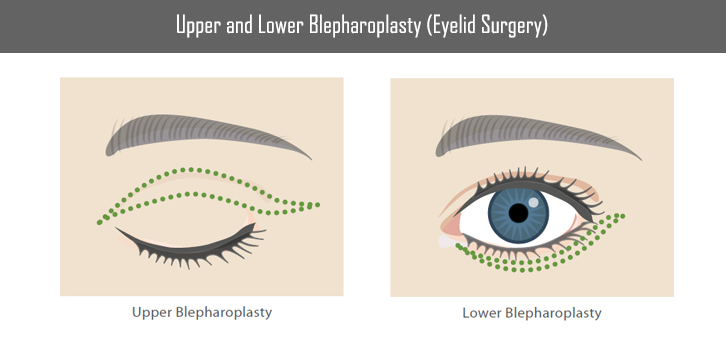
Upper eyelids – typically the incision begins within the natural crease of the eye’s inside corner and extends slightly beyond the outside corner into the crow’s feet or laugh lines. Through this incision, excess skin and fatty tissue are removed. The incision line follows the natural contour of the upper eyelid and is camouflaged when healed.
Lower eyelids- usually the incision is concealed just below the lower lashes. Through this incision, excess skin, muscle, and fat are removed. Your surgeon may also make special adjustments. For example, the fat beneath the eye can be redistributed to reduce puffiness or bulges. In some patients, the underlying muscle will be tightened.
Dr. Rajagopal may decide that the best approach for removing fat from the lower eyelid is with a transconjunctival blepharoplasty. In this procedure, an incision is placed inside the lower eyelid. This technique requires no external incision, but it cannot be used to remove excess skin.
After Your Eyelid Surgery
When surgery is complete, you may experience any of the following:
blurred vision – this temporary condition is caused by the ointment that may have been applied to lubricate and protect the eyes.
tightness around the eyes – this sensation will diminish once the swelling goes down.
discomfort – some discomfort is common after any type of operation. It can be controlled with pain medication prescribed by your physician. bruising and swelling – the amount and duration of swelling and bruising varies greatly among individuals.
Although everyone heals at a different rate, you can expect that your recovery will follow this general time line:
The first day:
In this earliest stage of healing, it’s important to rest with your head elevated.
Cold compresses on the eyes reduce swelling.
Within the first week:
Bruising around the eyes will reach its peak and then begin to fade.
Healing may be accompanied by mildly blurred vision, excess tearing or dryness, light sensitivity or itching.
You can begin to use makeup to conceal any discoloration.
Stitches will be removed. You may resume most of your normal (non-strenuous) activities.
After several weeks:
Most of the swelling will subside and you’ll begin to see the final result.
Any vision-related symptoms will disappear.
You may resume vigorous exercise, including bending and lifting.
You may resume wearing contact lenses.
Eyelid Surgery – Before and After Photos


Procedure Cost
View San Francisco Plastic Surgery and Laser Center’s pricing chart for the cost of this procedure and other affordable treatments and procedures.
Reviews
Layla F. (yelp.com) – Salem, MA 3/29/2012
Went in for eyelid surgery about ten years ago and then for breast reduction and lift about three years ago…
Beautiful results. Wish I could post pics:). Love the all-woman staff, including the anesthesiologist. I have since recommended her to a number of friends. This place does gorgeous work. Many, many thanks.
Why choose Dr. Rajagopal and the San Francisco Plastic Surgery and Laser Center for your eyelid surgery?
Practice Led by Board Certified Female Surgeon
21 Years of Cosmetic Surgery Experience
Friendly and Professional Female Staff
Reliable, Positively Reviewed Results
Affordable Pricing and Financing Options
If you have any questions regarding Eyelid Surgery or wish to schedule a consultation with Dr. Rajagopal, please call the San Francisco Plastic Surgery & Laser Center at 415-392-3333.