Lower Blepharoplasty With Fat Transfer for Prominent Under-Eye Bags in a Young Patient
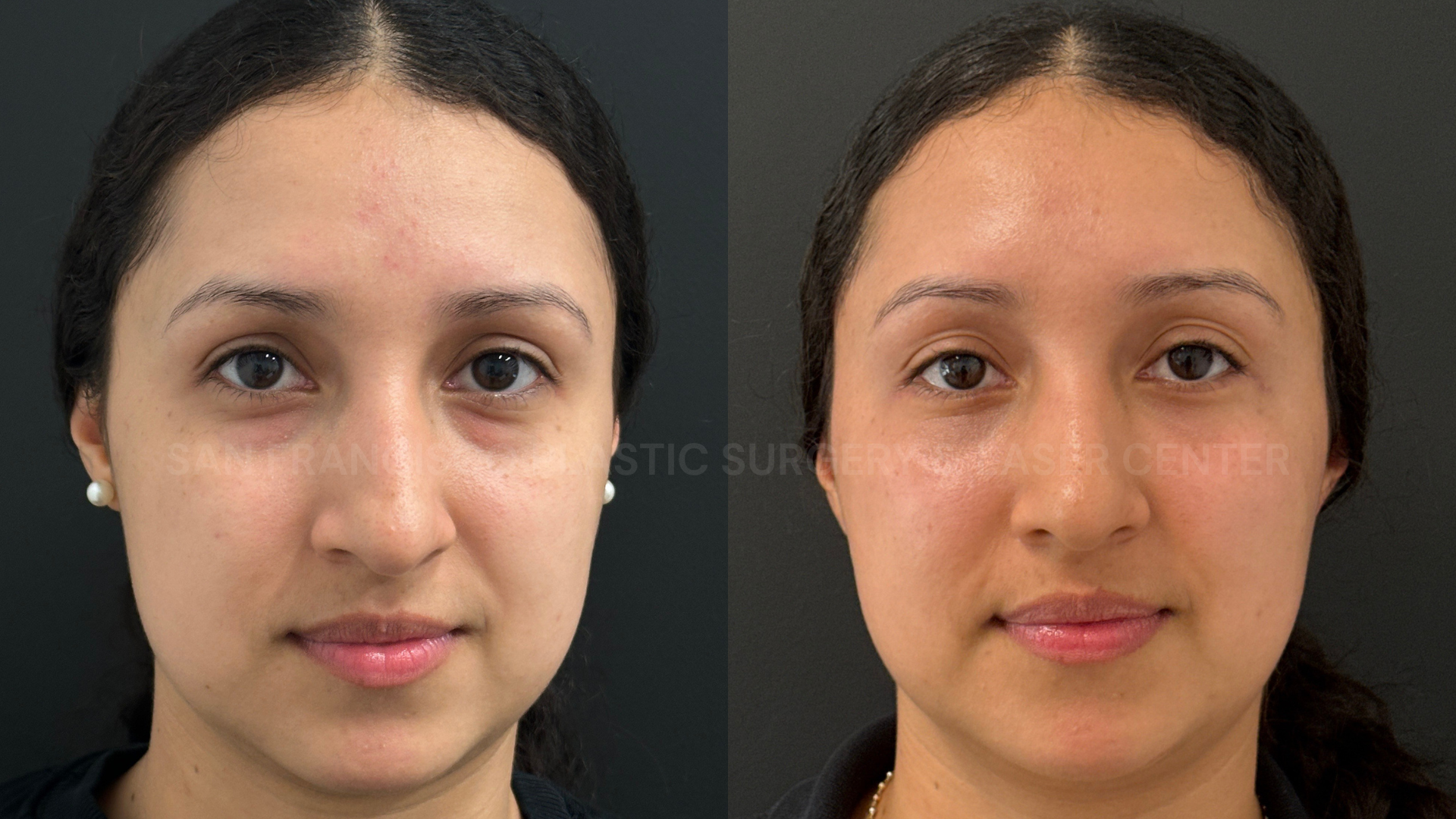
Prominent under-eye bags are often associated with aging, but they can also appear in patients who are still in their 20s. In younger patients, under-eye bags is frequently related to genetics, facial anatomy, and the natural relationship between the eyes, cheeks, and surrounding tissues.
Dr. Usha Rajagopal recently treated a young woman in her early 20s who was concerned about the appearance of her under-eye area. Although the patient was young, she had prominent lower eyelid fat pads that made her look more tired than she felt.
To address both the under-eye bags and the surrounding facial structure, Dr. Rajagopal performed a lower eyelid blepharoplasty combined with fat transfer to the under-eye and cheek areas.
Why Can Younger Patients Develop Under-Eye Bags?
Under-eye bags are not always caused by aging, a lack of sleep, or lifestyle factors. For some patients, they are simply part of their natural anatomy.
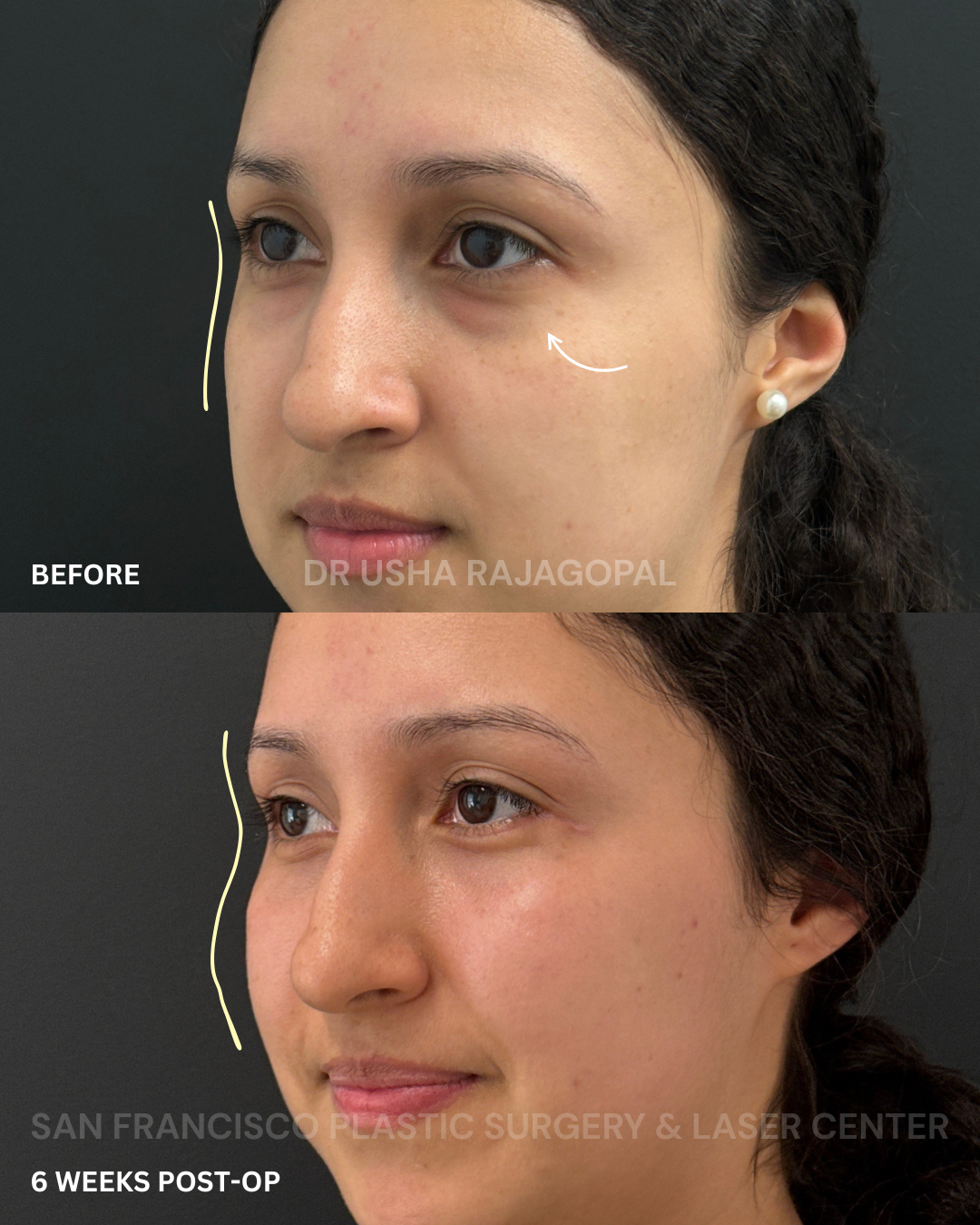
This patient had prominent lower eyelid fat pads, along with a midface volume deficit. A midface volume deficit means that a person naturally has less fullness through the cheek area. Her cheekbones were also relatively flat.
Because the eyes and globes, which is the medical term for the eyeballs, were slightly more prominent in relation to her cheekbones, the lower eyelid fat pads appeared more noticeable.
This combination created a visible separation between the lower eyelid and cheek. Rather than treating only the under-eye bags, Dr. Rajagopal evaluated how the entire under-eye and midface area worked together.
What Is a Lower Blepharoplasty?
A lower blepharoplasty, commonly called lower eyelid surgery, is a surgical procedure designed to improve the appearance of the lower eyelids.
Depending on the patient’s anatomy and concerns, the procedure may involve removing or repositioning lower eyelid fat, tightening the supporting tissues, and carefully redraping the skin.
For this patient, Dr. Rajagopal used a subciliary approach. This means the incision was placed directly underneath the lower lash line.
Through this incision, Dr. Rajagopal performed the lower eyelid blepharoplasty, tightened the underlying muscle, and carefully redraped the skin to create a smoother appearance.
Why Was Fat Transfer Added?
The patient’s concern was not limited to prominent lower eyelid fat pads. She also had less natural volume through the midface and cheeks.
Treating the eyelids alone may not fully address the transition between the lower eyelid and cheek in a patient with a midface volume deficit. For this reason, Dr. Rajagopal combined the lower blepharoplasty with fat transfer.
Fat was transferred to several areas, including:
The under-eye area
The mid-cheek
The lateral cheek
Adding volume to these areas helped support the surrounding facial structure and create a smoother transition from the lower eyelid to the cheek.
The goal was not to dramatically change the patient’s appearance. The goal was to improve the under-eye area while restoring natural-looking volume and balance to the midface.
A Full-Face Approach to Under-Eye Rejuvenation
Every patient’s facial anatomy is different. Two people with similar under-eye concerns may require completely different treatment plans.
Some patients may benefit from lower eyelid surgery alone. Others may benefit from fat repositioning, fat transfer, injectable fillers, skin treatments, or a combination of procedures.
In this patient’s case, the relationship between her under-eye fat pads, cheek volume, cheekbone structure, and eye prominence all contributed to her appearance.
By evaluating the entire area rather than focusing only on the lower eyelids, Dr. Rajagopal was able to create a treatment plan tailored to the patient’s individual anatomy.
What Does Recovery Look Like?
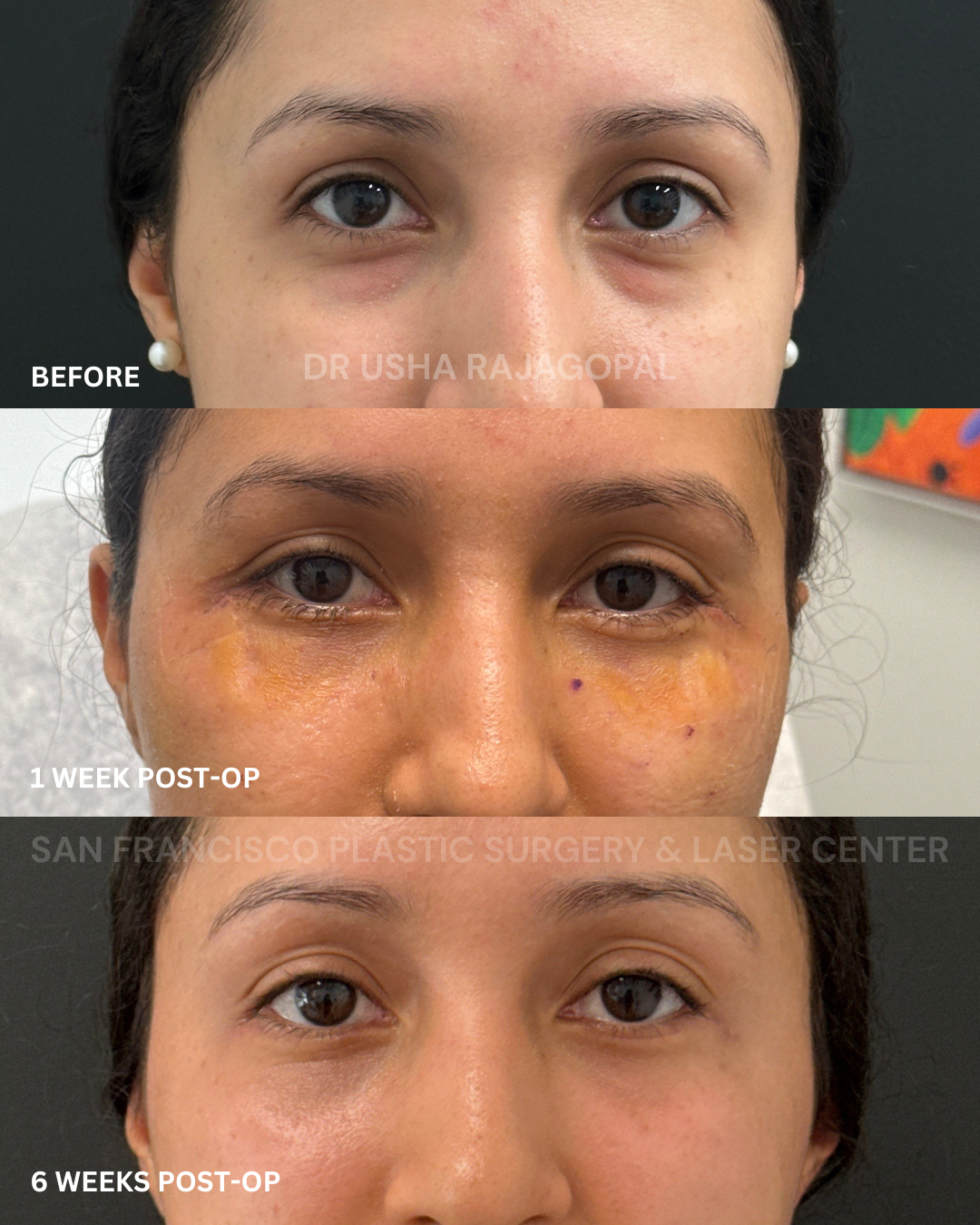
The patient’s photos show three stages of her treatment:
The top image shows her before surgery.
The middle image shows her immediately after surgery, while her eyes were still closed and the surgical towels remained in place.
The bottom image shows her six weeks after surgery.
At only one week post-op, she had minimal bruising and was healing well. Some swelling and bruising are expected following lower eyelid surgery, and the final outcome cannot be evaluated this early in the recovery process.
Her appearance will continue to change as the swelling decreases, the transferred fat settles, and the tissues heal.
Dr. Rajagopal evaluates her again at approximately six weeks after surgery and we see that she is healing beautifully.
When Will the Final Results Be Visible?
Lower blepharoplasty results develop gradually.
Patients may notice an early improvement once the initial swelling and bruising begin to resolve. However, the under-eye tissues and transferred fat need time to settle.
The appearance typically continues to improve over the following weeks and months. Healing times vary depending on the patient, the extent of the procedure, and the treatments performed.
Who May Be a Candidate for Lower Eyelid Surgery?
Lower eyelid surgery may be appropriate for patients who are concerned about:
Prominent or bulging under-eye fat pads
Under-eye bags that are related to genetics
A tired appearance that does not improve with rest
Loose lower eyelid skin
A visible separation between the lower eyelid and cheek
Under-eye concerns that cannot be adequately treated with nonsurgical procedures
Age alone does not determine whether someone is a candidate. Younger patients with genetically prominent fat pads may benefit from surgery, while other patients may be better suited for nonsurgical treatments.
A consultation is necessary to evaluate the eyelids, skin quality, facial structure, cheek volume, medical history, and treatment goals.
Lower Blepharoplasty in San Francisco
Dr. Usha Rajagopal is a board-certified plastic surgeon in San Francisco with extensive experience in facial rejuvenation, eyelid surgery, fat transfer, and facial balancing.
Her approach focuses on evaluating the entire face and creating a personalized treatment plan based on each patient’s natural anatomy.
To learn whether lower eyelid surgery, fat transfer, or another treatment may be appropriate for your concerns, contact San Francisco Plastic Surgery and Laser Center at 415-392-3333 to schedule a consultation.
Patients may also submit photos for a complimentary online facial assessment. Our team can review your concerns and provide initial treatment recommendations before an in-person consultation.
Individual results and recovery experiences vary. Photos taken during the early recovery period do not represent final surgical results. A consultation is required to determine whether you are an appropriate candidate for treatment.